Hot season is here, which means it’s time to sealcoat–schedule early!
Did you know that Sealcoating your parking lot during early spring and early autumn is one of the most effective ways to protect your asphalt? As temperatures rise, weather conditions become ideal for sealcoating, but the demand for sealcoating parking lot services also increases.
Because of this, schedules fill up quickly, and just because it’s the right time to sealcoat doesn’t mean contractors will have immediate availability. Scheduling your sealcoating parking lot service early ensures your property is maintained on time, before minor issues turn into costly repairs.
Warm Weather Matters For Sealcoating Parking Lot Projects
When it comes to preventing costly wear and tear and getting the most out of your investment, staying on top of preventative maintenance is key. Sealcoating your parking lot is one of the most effective ways to protect your asphalt, but proper conditions are essential for the best results.
For optimal sealcoating parking lot performance, temperatures should be above 70°F (ideally 75°F or higher), with dry conditions and no rain in the forecast. Warm, sunny weather allows the sealcoat to cure quickly, and adequate curing time is critical to ensure the sealcoat properly bonds and delivers long-lasting protection.
Signs Your Parking Lot Needs Sealcoating
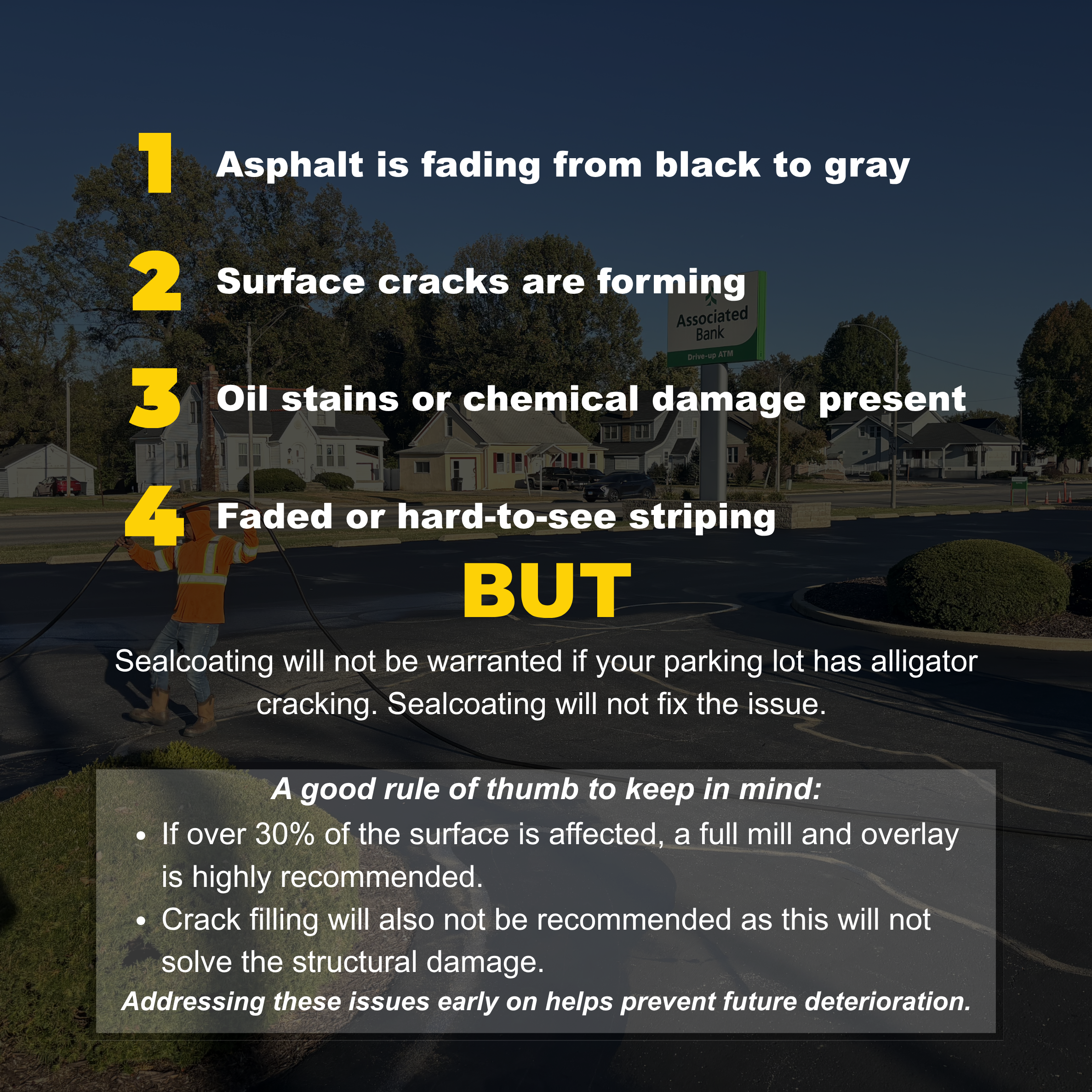
If you’re not sure if it’s time to sealcoat your parking lot, look for these four common signs.
Benefits of Sealcoating Your Parking Lot:
Improves appearance
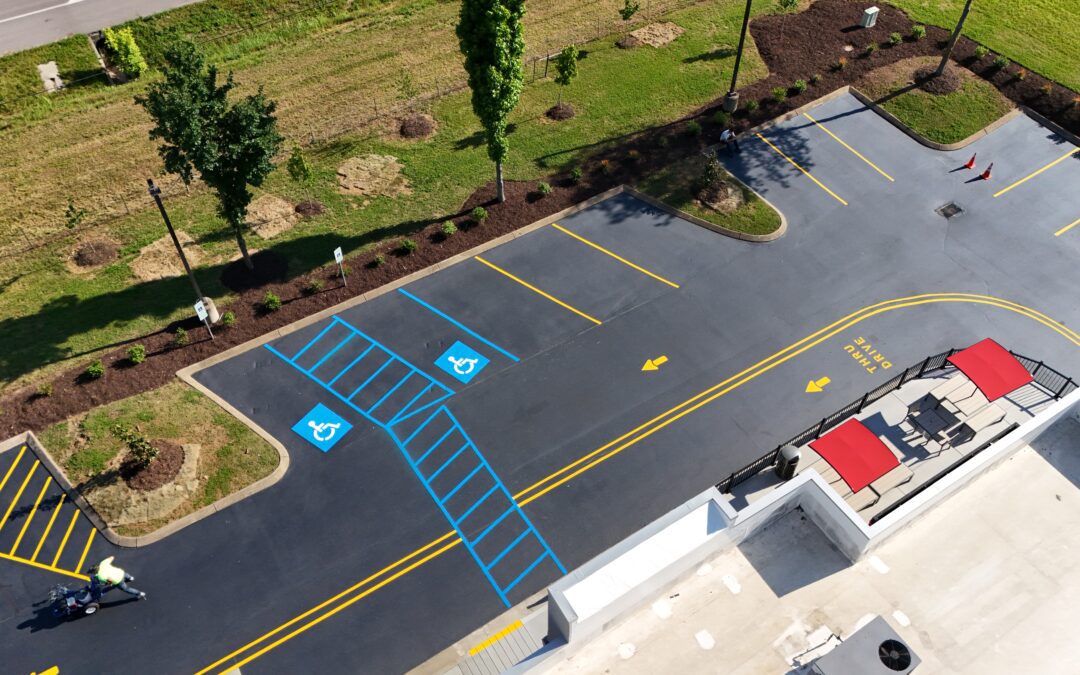
Sealcoating your parking lot offers both short-term and long-term advantages, one of which, being that a fresh, jet-black finish instantly boosts curb appeal and creates a professional look.
prevents water penetration
Water is one of the most damaging elements to asphalt. Once it seeps below the surface, it can weaken the base layer, leading to cracks, potholes, and structural failure.
Sealcoating your parking lot acts as a protective barrier that blocks water from penetrating the asphalt. It fills surface voids and small imperfections, creating a smooth, sealed layer that prevents moisture from working its way into the pavement.
Without sealcoating, water can enter through tiny cracks and pores. Over time this can lead to:
- Expansion and contraction from temperature changes
- Worsening cracks and potholes
- Base erosion and costly repairs
Sealcoating helps stop this process before it starts by repelling water and reducing absorption, keeping your asphalt structurally sound and extending its lifespan.
PREVENTING SUN DAMAGE TO ASPHALT
An average Tennessee summer brings intense heat, strong sunlight, and long days of constant exposure from UV rays, all of which takes a serious toll on your pavement. Visible signs of sun damage on asphalt may include:
- Cracking
- Raveling
- Potholes
- Fading Color
- AND more
Imagine this, day after day, the sun beats down on your parking lot, causing the asphalt to heat up, dry out, and lose its flexibility. As temperatures rise, the binding oils in the asphalt begin to break down under UV radiation. This leads to fading, brittleness, and eventually cracking.
On top of that, the combination of heat and humidity common in TN can accelerate wear, making your pavement more vulnerable to damage from traffic, oil spills, and water intrusion. Without protection, this cycle continues, weakening your asphalt and shortening its lifespan.
That’s why sealcoating your parking lot is essential. It acts as a protective barrier against harsh summer conditions, helping your pavement withstand the heat, block UV rays, and stay stronger for longer.
pavement lifespan
Routine sealcoating is one of the easiest ways to extend the life of your parking lot. It helps prevent cracks, protects against the elements, and slows overall asphalt deterioration.
How often you should sealcoat depends on how much traffic your lot sees:
- Standard-use lots: every 2–3 years
- High-traffic areas: every 1–2 years
Pro Tip: You may need more frequent maintenance if your property experiences:
- Heavy vehicle traffic
- Oil or chemical exposure
- Snow plowing and salting
Sealcoating your parking lot is a cost-effective solution. Instead of replacing asphalt every 10 years, routine maintenance significantly extends its lifespan. Prevention now reduces long-term repairs and protects your investment for years to come.
Best Practices
Want the best results? Follow these pro tips, and keep in mind that timing is everything when it comes to achieving a smooth, durable, and long-lasting finish.
- Allow 24 hours for curing before allowing traffic onto the lot.
- Avoid sealcoating during falling leaf season – You may end up with unwanted prints, debris, etc in your sealcoat.
- Do not sealcoat new asphalt, wait at least 12 months – Allows the new asphalt to fully harden and reduces the risk of trapping the chemicals that make the asphalt flexible and more susceptible to tire marks, imprints, and cracking.
DIY VS. PROFESSIONAL SEALCOATING PARKING LOT SERVICES
Although DIY sealcoating may seem like a cost-saving option, there are key differences that can significantly impact the quality and longevity of your results.
DIY Sealcoating:
- Time-intensive (can take all day)
- Requires manual application
- Risk of uneven coverage
Professional sealcoating:
- Faster & more efficient
- Uses commercial-grade materials like Sealmaster and Neyra
- Provides consistent, long-lasting results
Get Expert Sealcoating & Striping Services
In conclusion, don’t wait until it’s too late, early Spring and early fall are peak seasons for asphalt maintenance.
Booking early ensures:
- Better scheduling availability
- More ideal weather conditions
- Faster project completion
Let Mad Jack’s Asphalt & Concrete take care of your parking lot maintenance, we will ensure your parking lot project is done right the first time. Our members are highly skilled, educated, and understand the importance of getting it done right.
We provide all-inclusive professional asphalt & concrete services to keep your property safe and looking its best. Give us a call at (615) 480-0489 to receive your FREE quote on your next project!