Case Study: Proactive Erosion Control and Site Rehabilitation
When most people think about erosion, they picture a slow, invisible process where soil is quietly moving from one place to another over time. But left unaddressed, erosion doesn’t stay quiet for long, it escalates. What starts as a soft spot in a grassy shoulder becomes a washout. A worn gravel path becomes a rutted, hazardous roadway, and a neglected drainage area becomes a direct threat to underground utilities and public infrastructure.
Unfortunately, that’s exactly what we encountered at a Love’s Travel Stop in McComb, Mississippi. On a positive note, it’s the perfect case study in why proactive erosion control and site management matter so much in commercial and high-traffic environments.
Here’s Why Proactive Erosion Control Is Worth It
Erosion control isn’t glamorous work by any means, and it rarely makes headlines until something goes wrong. Common examples can include: a washout forming near a road, exposed utility line, or flooding backing up onto a property. At that point, the cost of repair is most likely many times greater than what early intervention would have cost.
The goal of proactive erosion management is simple: identify the warning signs and addressing them before they become structural, safety, or liability problems. For commercial sites like fuel stops, truck stops, and retail properties, this is especially critical. These locations see constant heavy traffic, impervious surfaces create aggressive runoff, and the land surrounding the pavement, fuel islands, and access roads are under continuous stress.
At the Love’s Travel Stop in McComb, we identified several distinct problem areas, each at a different state of deterioration, and developed targeted solutions for each one.
Problem #1: The 6-Foot Washout Threatening the Road and Utilities
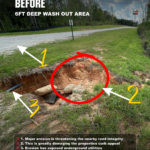
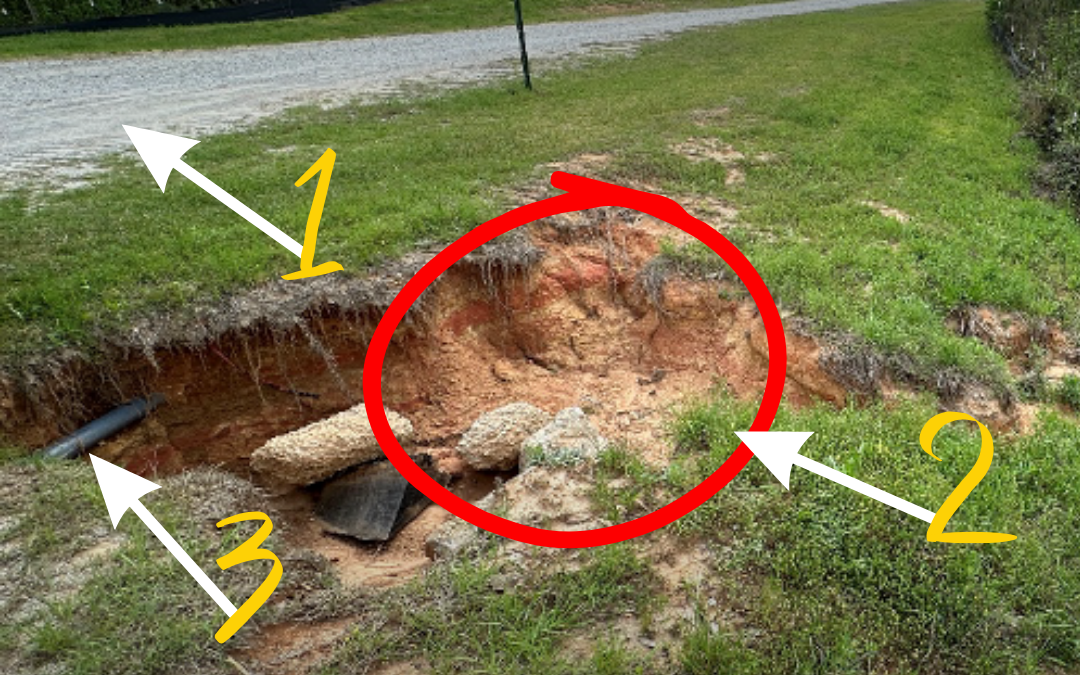
Perhaps the most ongoing issue on the site was a severe erosion washout that had grown to approximately six feet in depth along the property’s perimeter. This wasn’t just a cosmetic problem, the washout had progressed to the point that it was threatening a nearby roadway and, critically, had begun exposing underground utilities.
Exposed utilities represent a serious risk as explained by Common Ground Alliance: damage from continued erosion, equipment contact, or freeze-thaw cycles can lead to service interruptions, repair costs, and liability. And a destabilized roadway edge can fail suddenly, especially under the weight of commercial truck traffic common to travel stops.
Our Solution:
We backfilled the washout using a combination of stone and compacted soil, rebuilding the area from the base up. The sub-base was compacted in lifts to maintain structural integrity and prevent future settlement. The surface was then graded to direct water flow away from the area. Next, we seeded the restored zone to establish vegetative cover, because grass roots are one of nature’s best erosion deterrents. It works by binding soil together and absorbing surface runoff.
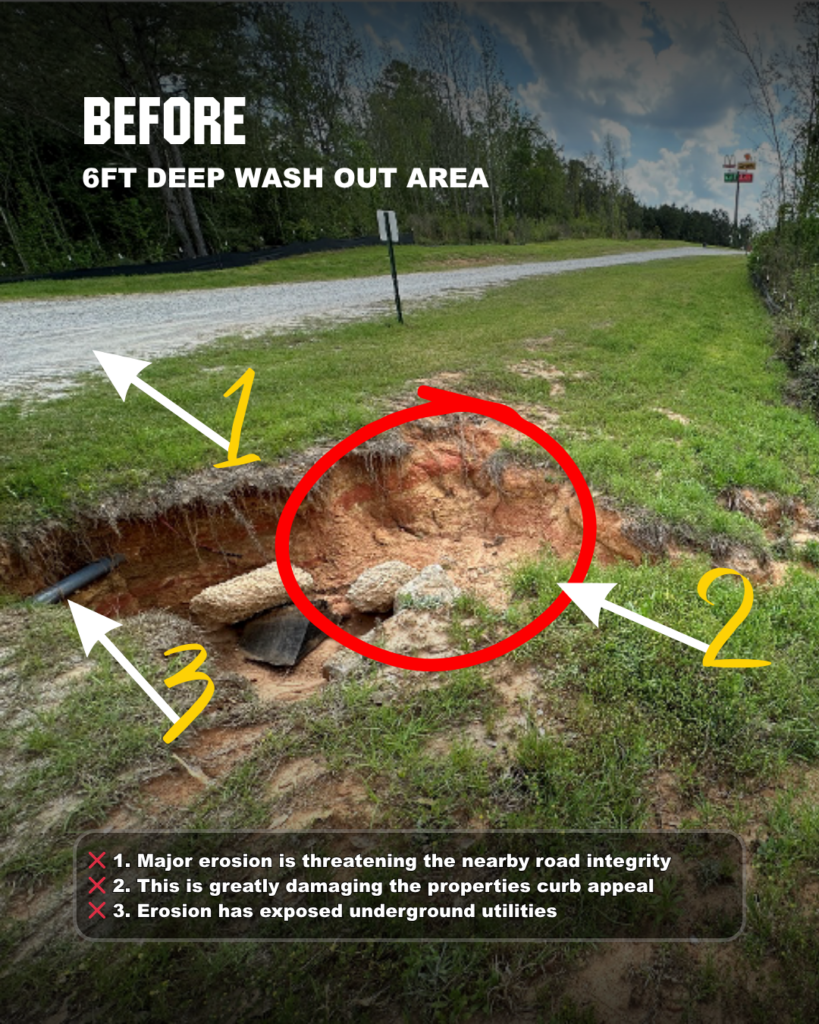
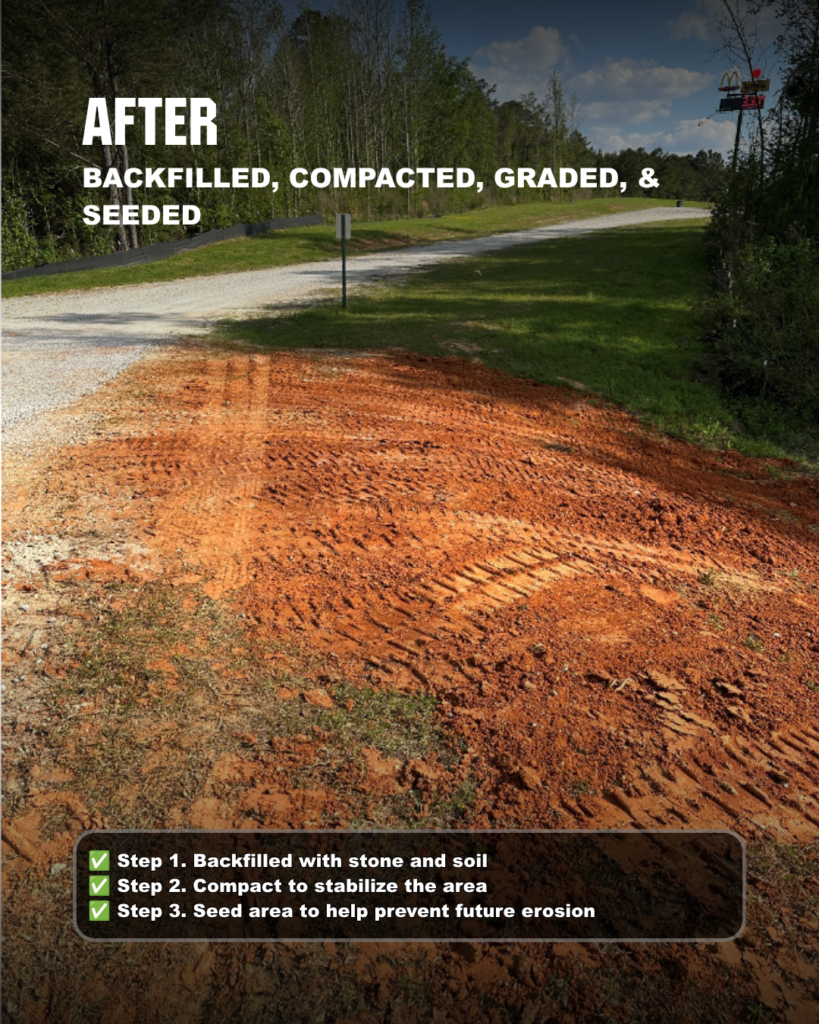
Before and after photos: the exposed washout cavity and the restored, graded, seeded surface
Problem #2: Deteriorated Roadway with Deep Rutting and Poor Drainage
The internal roadway at the site had deteriorated significantly. Deep rutting from heavy vehicle loads had created uneven, hazardous driving conditions, and the existing surface had no effective system for managing stormwater runoff. Water was pooling, flowing unpredictably, and accelerating the breakdown of what remained of the pavement.
This is a pattern seen at countless commercial properties: pavement is laid, years pass, maintenance is deferred, and eventually the surface fails faster as water infiltrates the sub-base and weakens it from below.
Our Solution:
We rebuilt the roadway from the ground up. The sub-base was reconstructed to provide a stable, properly compacted foundation. The roadway was then paved with asphalt, restoring a smooth, safe driving surface. To manage stormwater long-term, we installed a curb and gutter system along the roadway, a critical addition that channels water off the roadway surface and directs it toward designated drainage areas instead of allowing it to sheet-flow across pavement and erode surrounding soil.
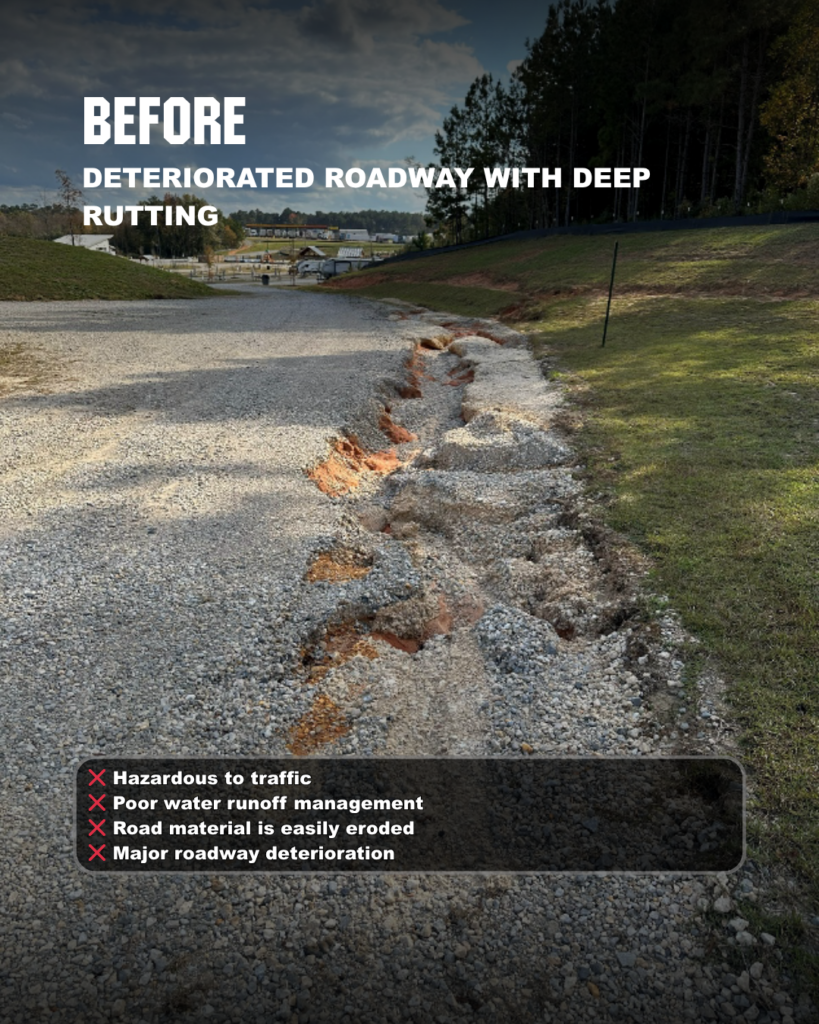
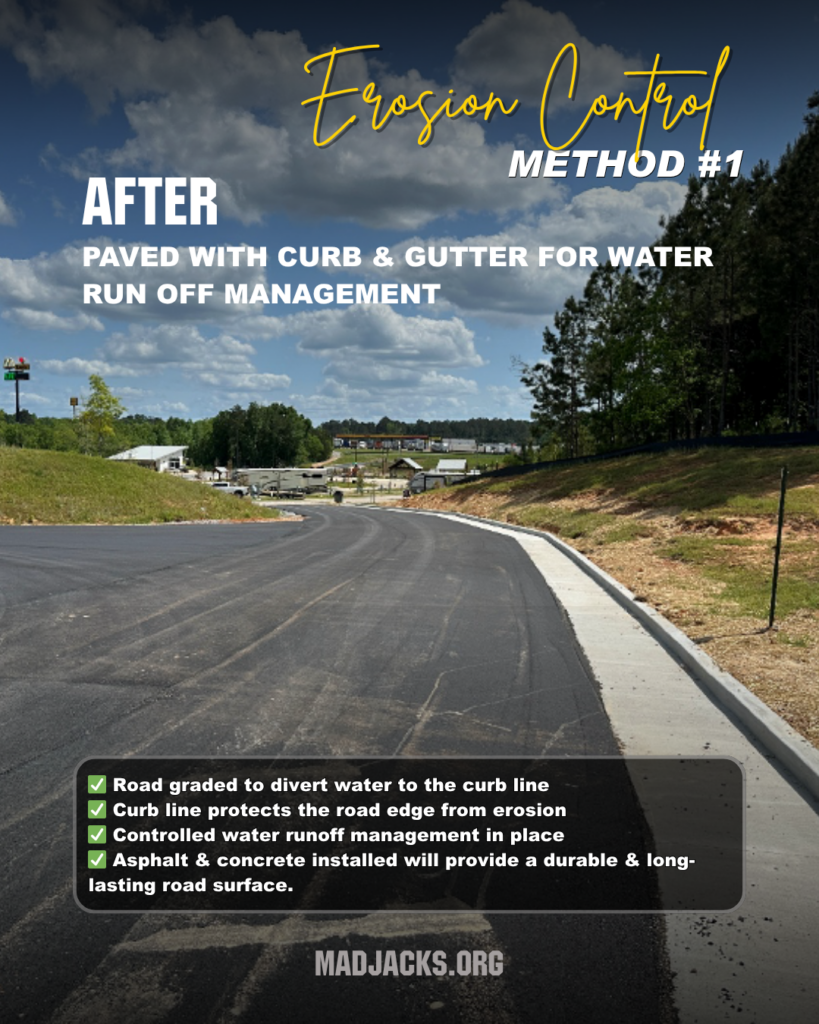
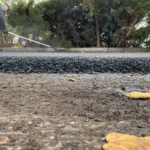
Before and after photos: the rutted, deteriorated road surface and the newly paved road with curb and gutter
Problem #3: No Controlled Drainage Pathway
Even with a curb and gutter system in place, water must go somewhere. Without controlled outlets, it finds its own path, and that path is almost always destructive. Uncontrolled sheet flow erodes topsoil, undercuts pavement edges, and deposits sediment in places it doesn’t belong.
Our Solution:
We designed and installed two new swales leading directly off the roadway. These drainage channels guide runoff in a controlled direction toward a proper stormwater management area. This reduces velocity and allows water to infiltrate gradually rather than rushing across exposed soil.
To further protect the swales and surrounding areas from erosion:
- Riprap was added along the roadside – angular stone lining that absorbs the energy of flowing water and prevents scour at points where water velocity is highest.
- An erosion control drainage channel with riprap was constructed to handle concentrated flow at key transition points.
- Areas adjacent to the swales and roadway were seeded and covered with straw mat (erosion control blanket), which holds seed and soil in place during the critical establishment period while vegetation takes root.
- Sodding was used in areas requiring immediate, established ground cover – particularly where grass growth needed to be fast-tracked to stabilize exposed soil.
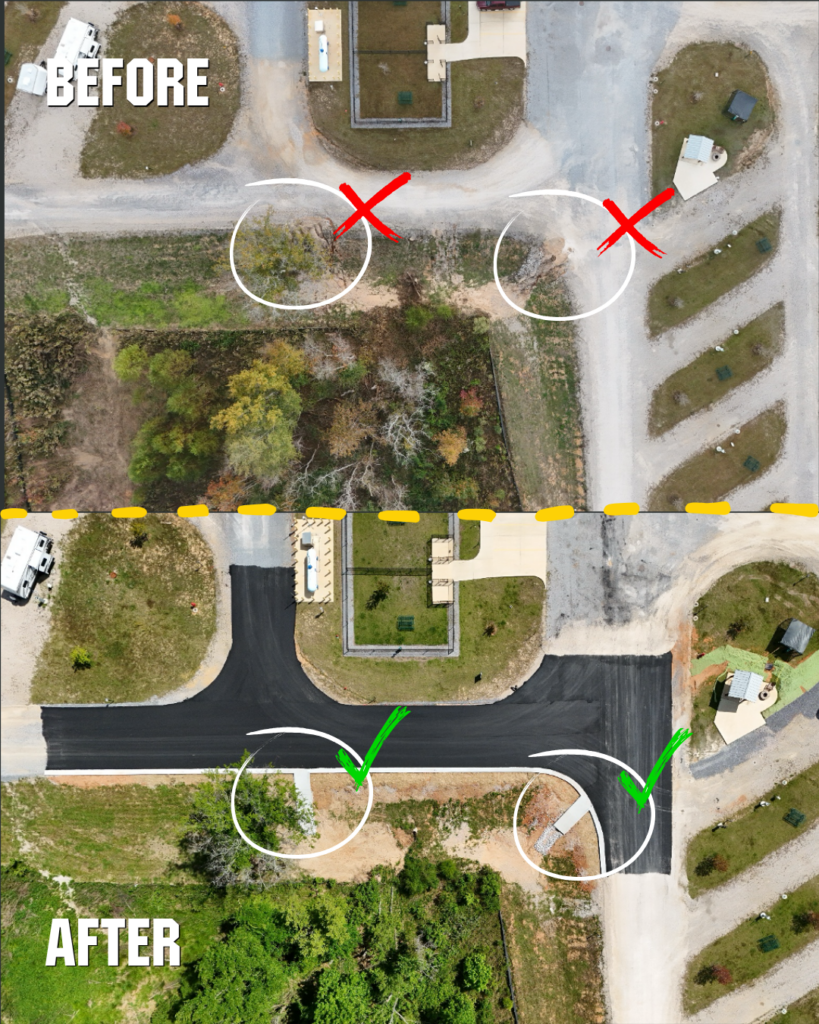

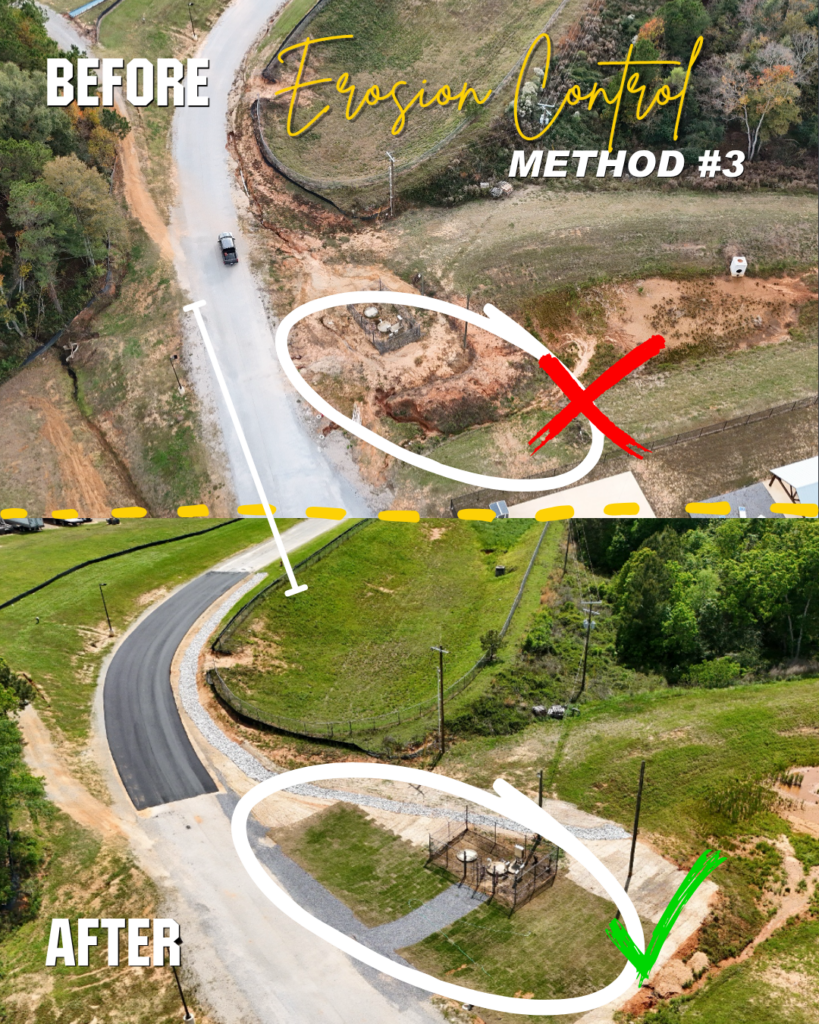
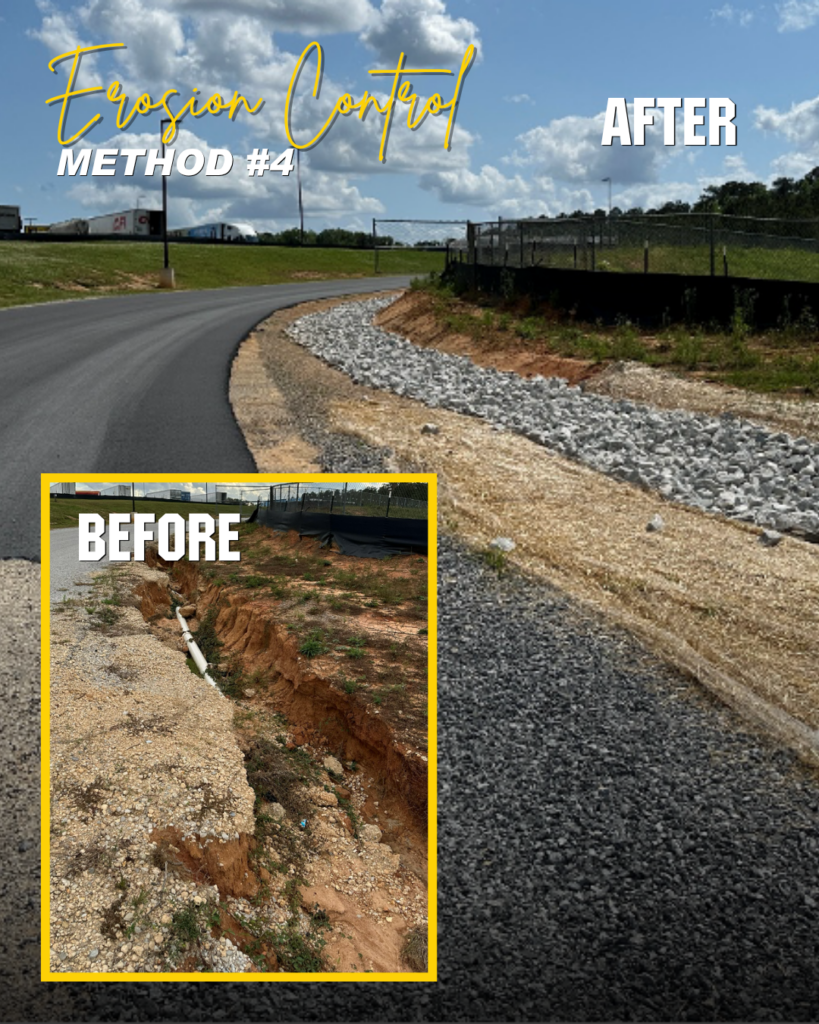
Before and after photos: uncontrolled drainage areas, and the completed swales, riprap, seeded, and sodded zones
The Full Scope: A Summary of What Was Done
Here’s a consolidated look at the erosion control and site rehabilitation work completed at the Love’s Travel Stop in McComb:
- Backfilled and compacted a 6-foot washout threatening a roadway and underground utilities, with grading and seeding to restore and protect the area
- Rebuilt the road sub-base and paved with asphalt to eliminate dangerous rutting and surface deterioration
- Installed curb and gutter along the repaved roadway for proper stormwater management
- Constructed two new drainage swales to route runoff from the roadway to appropriate drainage areas
- Built an erosion control drainage channel with riprap to handle concentrated flow
- Added riprap along the roadside to reduce scour and protect the road edge
- Seeded and applied straw mat over disturbed areas to promote rapid vegetation
- Sodded select areas for immediate ground cover and root-based soil stabilization
The Lesson: Small Problems Don’t Stay Small
What’s perhaps most instructive about this project is how the issues at this site represent a spectrum of erosion severity, from areas just beginning to show signs of failure to a washout that had already progressed to a critical stage. Every one of the severe problems we corrected started as something smaller.
The 6-foot washout was, at some earlier point, a 6-inch depression. The failed roadway was, once, just slightly rough. The absent drainage channels were, for a time, just poorly planned grading.
Erosion control done early is inexpensive, meanwhile, erosion control done in crisis mode is not.
For commercial property owners and managers, the takeaway is clear: schedule regular site inspections with a qualified contractor, prioritize drainage and vegetation management as part of routine upkeep, and act on warning signs before they become emergencies. The tools exist: swales, riprap, proper paving, seeding, erosion blankets, curb and gutter systems, and when deployed proactively, they protect your investment, your infrastructure, and the people who use your site every day.
Interested in an erosion control assessment for your commercial property? Contact us to schedule a site evaluation.
Enjoyed this article? Visit Jack’s Journals on our website for more industry insights, paving tips, and related articles.