Your parking lot is the first thing customers see when they pull in, and the last thing they experience when they leave. A run down parking lot creates room for liabilities and negative experiences. For example, commercial parking lots such as a Love’s Travel Stop take a serious beating every day from heavy trucks, high traffic volume, and Tennessee’s brutal summer heat which all accelerate deterioration faster than most people realize.
A few small cracks and faded striping can quickly become a slip-and-fall claim, an ADA violation, or a full-blown emergency repair, all of which cost far more than staying ahead of the problem. A well-maintained parking lot not only creates a positive first impression as discussed in our Best Paving Strategy blog, but also reflects the level of care you put into your business.
The Stakes Are Higher for Commercial Sites
A pothole in a residential driveway is an inconvenience. A pothole in the drive-through lane of a Taco bell or the fuel island of a travel stop is a liability. The difference is clear: volume. Hundreds or thousands of vehicles and pedestrians passing through daily means any commercial parking lot defect gets noticed fast, and the consequences of ignoring it are amplified.
Here’s what puts commercial property owners and facility managers at risk:
- Potholes and depressions in drive-through lanes, fuel aprons, parking fields and delivery areas that pose hazards for pedestrians and vehicles
- Cracked or heaving concrete at curbs, dumpster pads, sidewalks, or building entrances that can catch pedestrians, customers, or employees off-guard and create a trip hazard
- Faded or missing striping that creates confusion, accidents, and ADA violations
- Poor drainage leading to standing water, ice in the cooler months, erosion, and accelerated base failure
- Deteriorating fuel island and truck aprons that take constant heavy axel loads
Why Summer Is the Worst Time To Ignore Pavement Damage
In Tennessee, property owners have a legal duty to maintain reasonably safe conditions for customers and employees. A neglected parking lot is hard to defend in court, and can be used as evidence that you failed that duty.
Heat accelerates asphalt deterioration. Tennessee summers push pavement to its limits. The sun softens the binder in asphalt, heavy traffic loads create ruts and depressions, and the freeze-thaw cycles from the previous winter have already done their damage underground. Tennessee is a popular travel destination, so the summertime is peak tourism season. The traffic volume will be intensified alongside its already growing traffic issues.
What may have once been a hairline crack in the spring or summer can easily become a pothole by August. And what was a small drainage issue becoming a full-on washout. Acting now before conditions worsen almost always cost less than waiting.
Types of Commercial Sites We Frequently Work On
Mad Jack’s works closely with facility managers, business owners, and general contractors on projects that people don’t realize keep the world running smoothly. Commercial sites we frequently work on include:
- Fuel stations and travel stops – High-axle-load aprons, canopy pads, fueling lanes, and large format parking fields built to withstand semi-truck traffic.
- Grocery store and retail centers – High-volume parking fields, cart return pads, loading docks, and ADA-complaint accessible routes
- Quick service and full-service restaurants – Drive-through lanes, parking lots, dumpster pads, and concrete curbing for brands like Taco Bell, Texas Roadhouse, and similar concepts
- Banks and financial institutions – Drive-through lanes, ATM pads, and customer parking
- Hotels and hospitality – Guest parking lots, entrance drives, and delivery areas
- New commercial construction – Working alongside general contractors on site packages that include parking lots, drives, flatwork, and concrete infrastructure from the ground up
What A Thorough Parking Lot Assessment Looks Like
Our trained team will evaluate the surface condition, looking for cracking patterns such as alligator cracking, linear cracking, and edge cracking. They will identify any pothole locations and depth, surface raveling, and rutting. They will assess lot drainage to see whether water is flowing away from the property or pooling in ways that accelerate damage and create slip hazards. Identifying if the structural integrity of the base underneath the pavement is still sound, or whether deeper repairs are needed before resurfacing. Ensuring that the lot has proper striping and lot markings – ADA compliant accessible spaces, fire lanes, directional arrows, and standard stall markings. Looking over all concrete elements such as curbs and curb stops, sidewalks, ramps, and any concrete flatwork on the property.
Your Options: Repair, Reseal, or Repave?
Not every commercial parking lot needs a full replacement. The right solution depends on the age and condition of your pavement.
Crack sealing and patching – Works well for lots in generally good shape with isolated damage. Sealing and patching keeps water out of the base and extends pavement life at a relatively low cost.
Sealcoating – Protects the surface from UV rays, water infiltration, and fuel spills. It also restores a clean, professional appearance. It’s recommended for commercial lots to be sealcoated every 2-3 years.
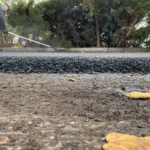
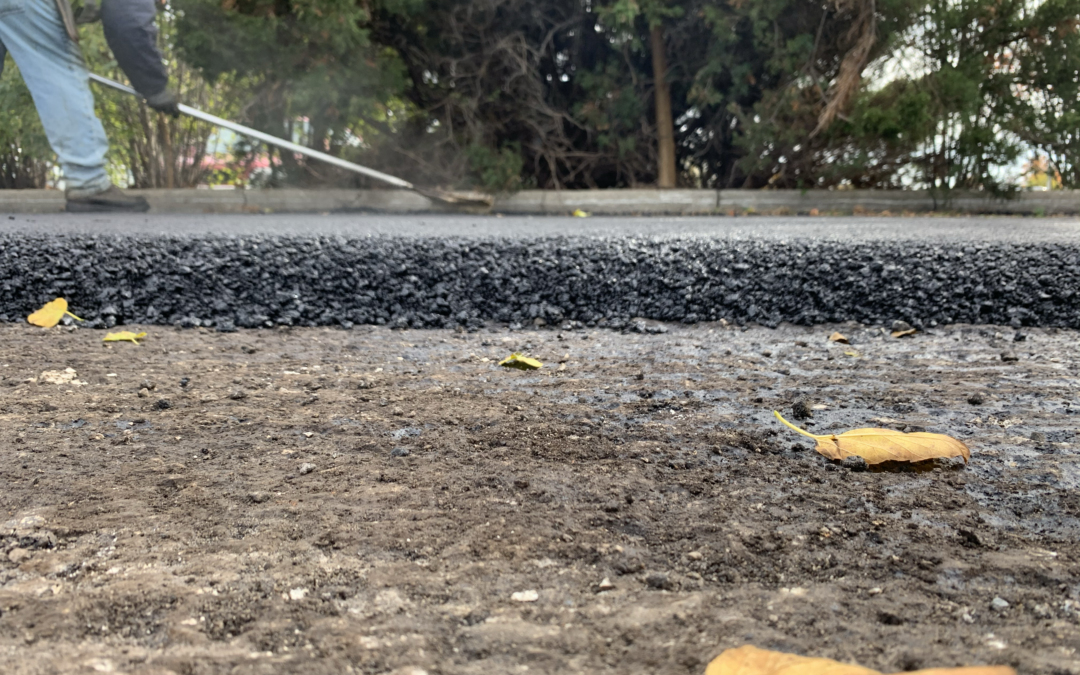
Mill and overlay (resurfacing) – Milling off the top layer and repaving adds a new layer of asphalt over the existing pavement when the surface is significantly worn but the base is still structurally sound. This is often the most cost-effective major repair option.
Full reconstruction – Necessary when the base has failed or the lot has deteriorated beyond the point where surface repairs make sense. Done right, a new lot can last 20-30 years with proper compaction, drainage, and routine maintenance.
Concrete repair and replacement – Addresses curbs, aprons, dumpster pads, loading areas, and other concrete features that contribute to both safety and curb appeal. Concrete work done right holds up under the heaviest commercial use.
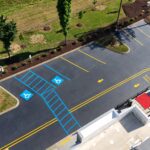
Striping and ADA compliance – Adding new striping, accessible space markings, fire lane markings, directional arrows, and any signage needed to meet current ADA requirements.
The Business Case for Staying Ahead of It
The math is straightforward for facility managers and multi-site operators:
- Crack sealing costs a fraction of pothole patching
- Routine sealcoating can double the life of an asphalt lot
- A clean, well-marked lot reduces liability exposure and insurance risk
- Customers notice – first impressions matter for every brand
- Planned maintenance means predictable capital budgets, not surprise emergency expenses
For general contractors managing new commercial builds, having a reliable concrete and asphalt subcontractor who shows up, hits deadlines, and delivers quality work is the difference between a smooth project closeout and a punch list that drags on for months.
Serving Commercial SITES ACROSS TENNESSEE AND BEYOND
Mad Jack’s works on commercial concrete and asphalt projects nationwide, from single-location operators to multi-site facility managers and national brands. Our concrete and asphalt crews provide all-inclusive services from quick repairs to repaving full parking lots. We bring the equipment, the crew, and the experience to get it done right.
Our commercial services include asphalt repair and repaving, concrete work, sealcoating, and striping.
Schedule a Free On-Site Assessment
A free walkthrough takes less than an hour and gives you a clear picture of your pavement’s condition. Find out what needs attention now, and what can wait with no pressure, just honest information so you can make the right call for your property and budget.
Mad Jack’s – Commercial Concrete & Asphalt / Nationwide Service Provider